
NewsFurniture History
Ever Wonder Why Turner Is a Last Name?
It came from the craftsmen that turned wood, and it's how this chair came to exist. Here's the history of bobbin furniture.
The origin of the idea
Turned furniture in England
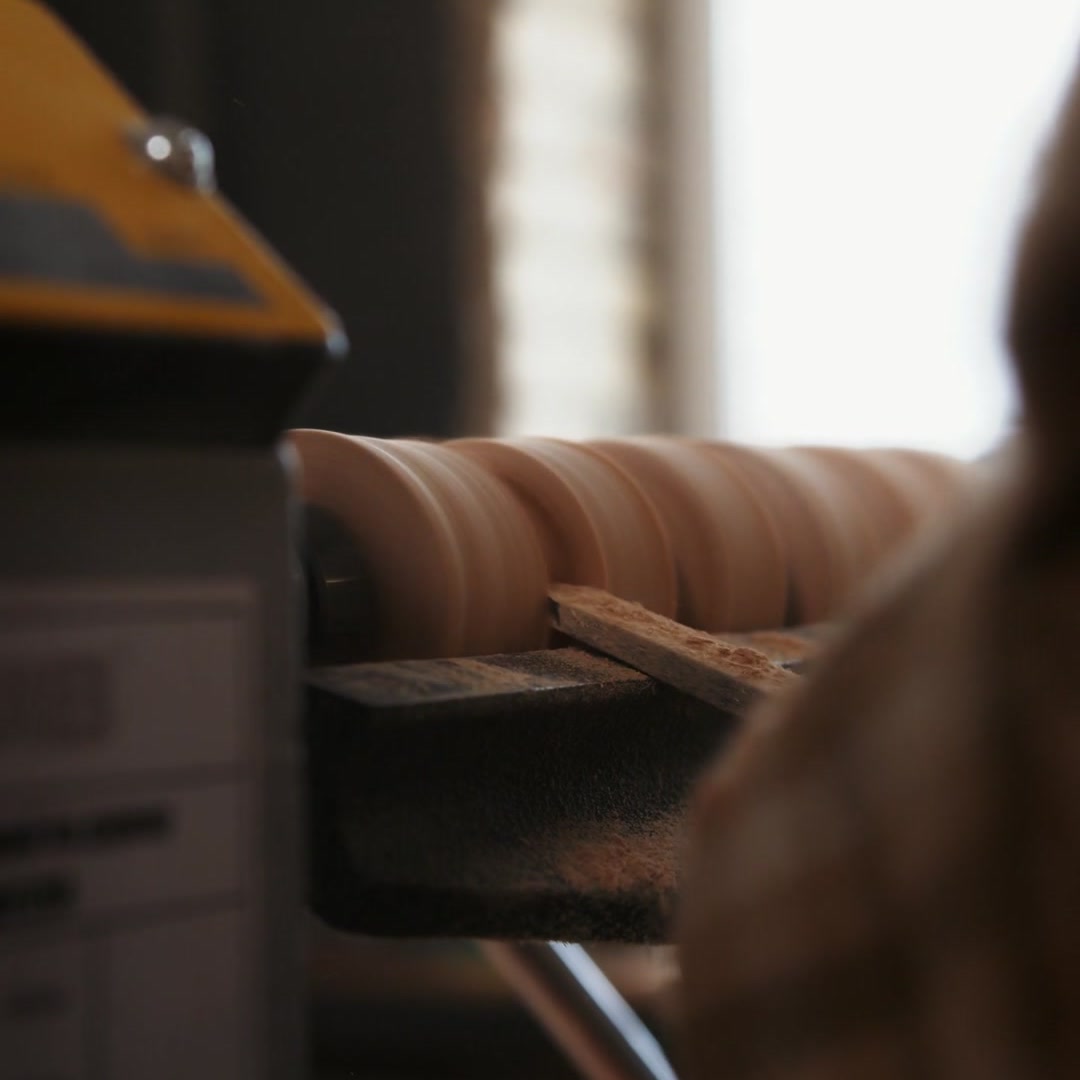
Turned furniture became popular in England in the late 16th and early 17th centuries, when the lathe made wood turning faster, repeatable and more precise.
A lathe is a machine that spins wood while a craftsman uses hand tools to shape it. Instead of carving one piece at a time, you could repeat the same motion over and over again to speed up your process. This makes chairs stronger, easier to produce, and while still having that decorative accent even without carvings or ornaments.
The earliest American-made furniture
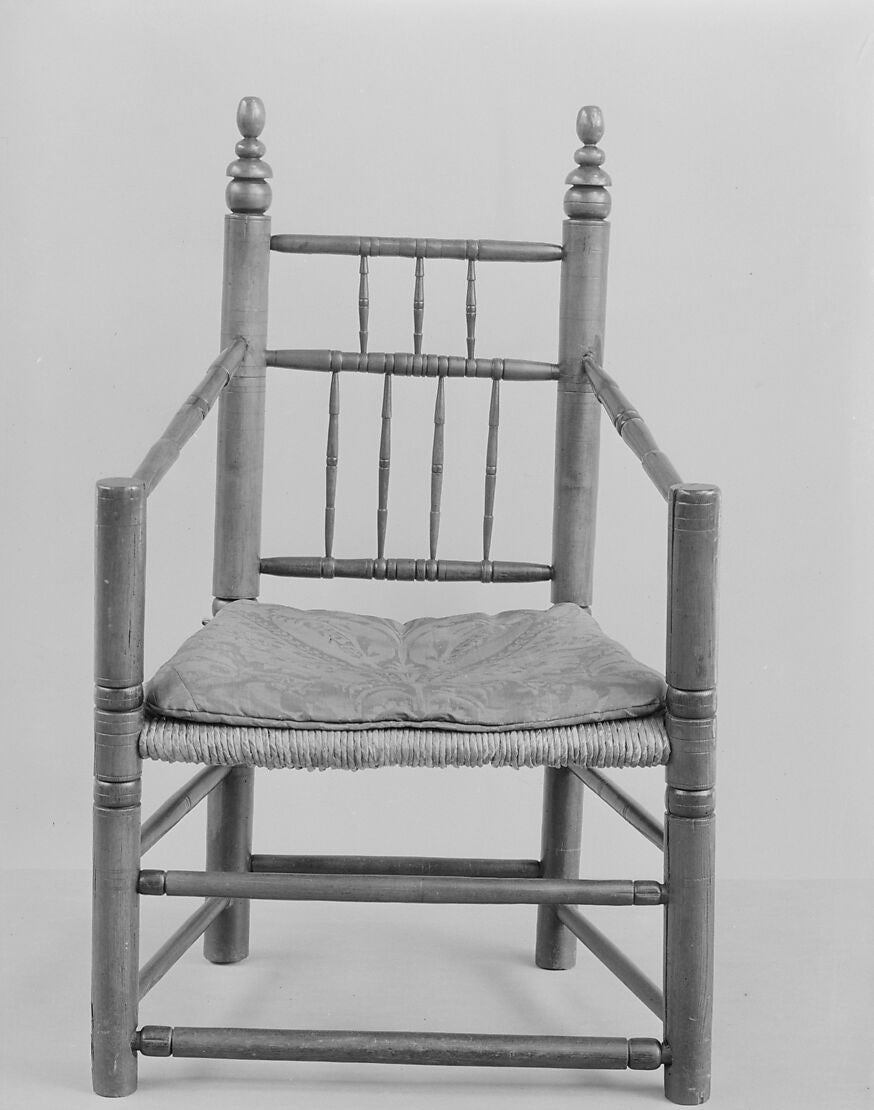
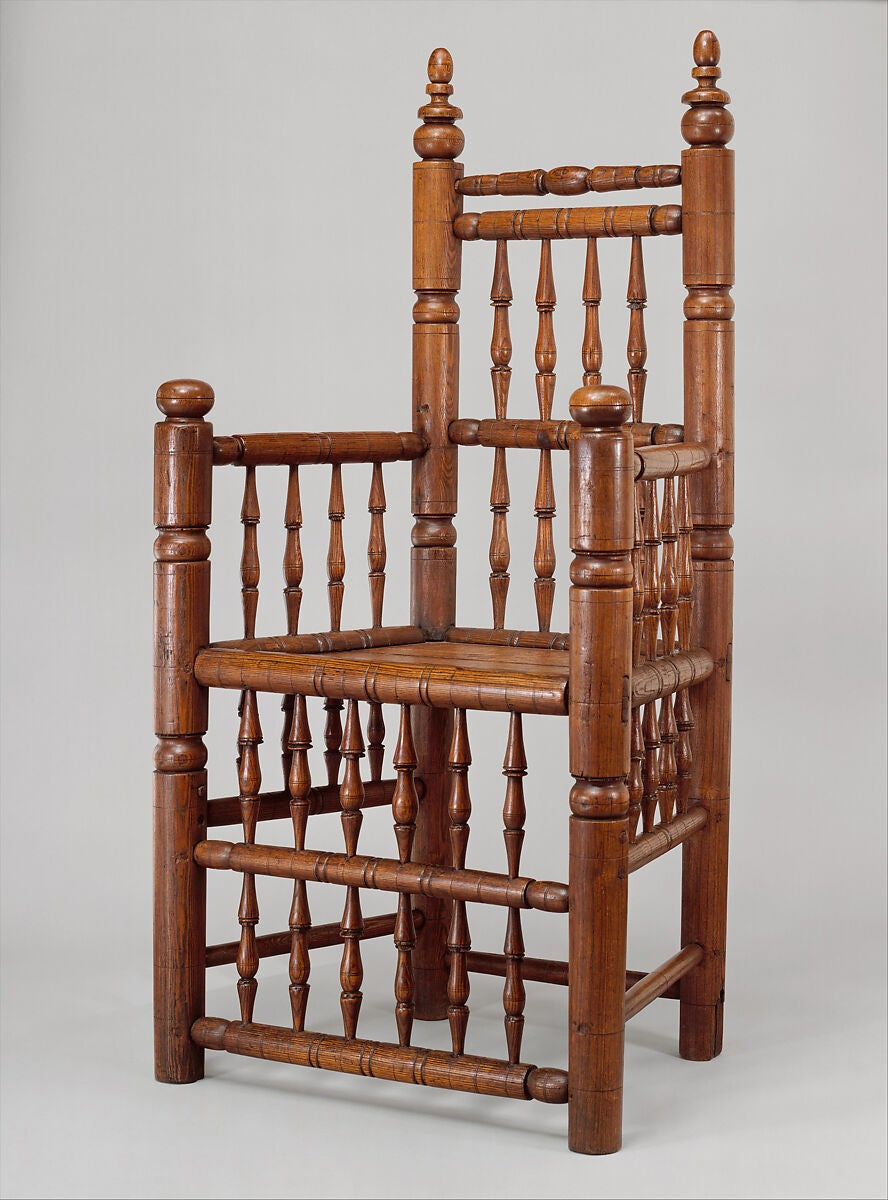
This style didn't just stay in England. It actually traveled to America for the colonies, becoming some of the earliest American-made furniture. Famous examples of these chairs include the Carver chair, named after the first governor of Plymouth Colony, John Carver; the Brewster chair, believed to belong to William Brewster, the colony's spiritual leader; the Bradford chair, which is believed to belong to Governor Bradford of the colony; and the Harvard or Holyoke chair, an English-made, famously uncomfortable throne acquired by the school in the 1700s that's still used by the school's president for commencement today.
(Source: The Met)
(Source: The Met)

(Source: Harvard Art Museums)
If these chairs look similar, it’s because they’re close cousins. The difference is where the spindles are placed: a Carver chair only has spindles in the back, a Brewster builds off that and adds spindles under the arms and the seat, and a Bradford chair goes even further with an extra row of spindles in the back. The Holyoke chair is the odd one out, an English-made triangular chair.
These chairs were often made with American white ash and maple, which is how we know the chairs are made here, since American white ash doesn't actually grow in England.
The Arts and Crafts revival
This style came back with the Arts and Crafts movement of the 19th century, with designers emphasizing high-end construction and handcrafted pieces as a rebuke against the perceived low-quality, mass-produced goods of the Industrial Revolution.
A “Sussex” chair made by Morris & Co., late 1800s (Source: Cooper Hewitt, Smithsonian Design Museum)
From the workshop
Our bobbin line
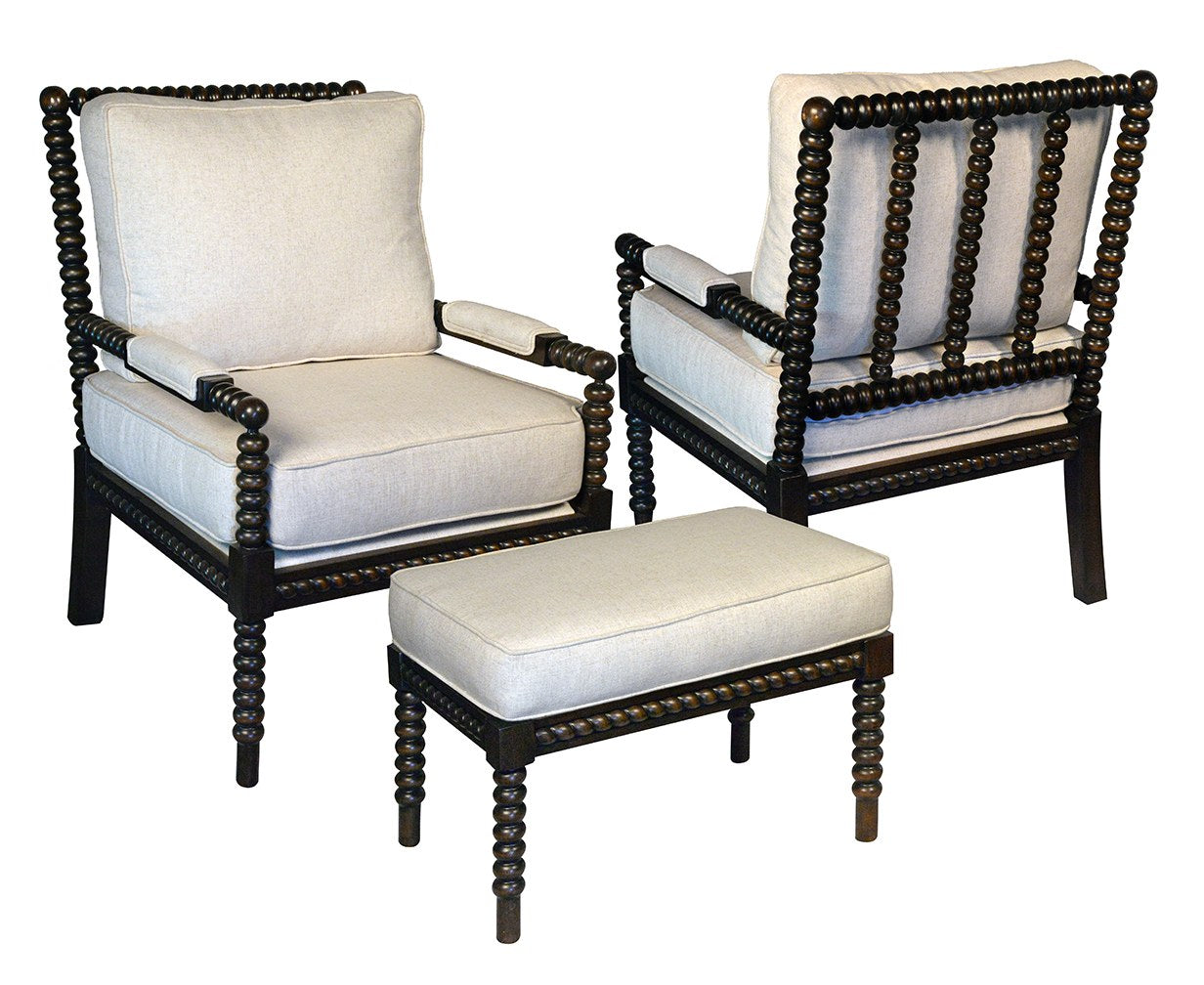
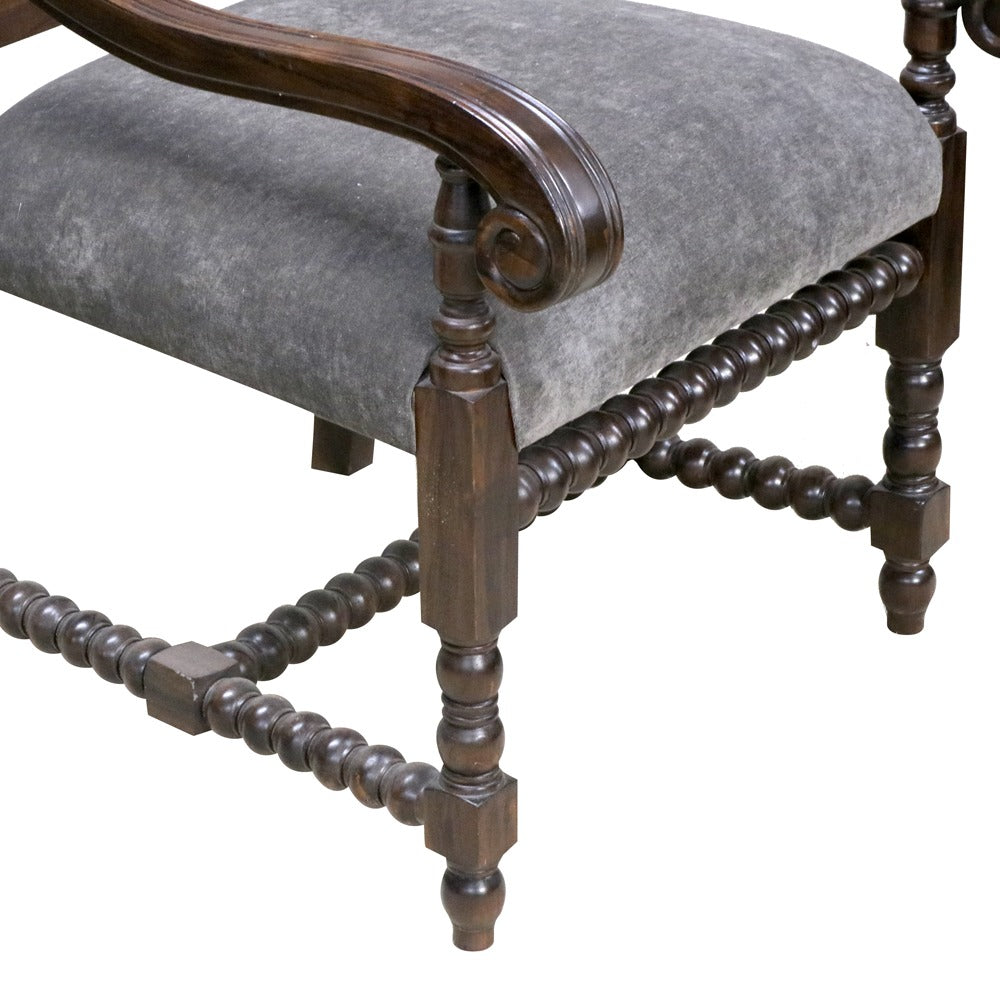
Today we still use turned furniture as part of our bobbin line because we believe in the quality of craftsmanship and the legacy of 400 years before us.
-
 Bobbin Twister Transitional Lounge Chair
-
 Barley Twister Transitional Sofa
-
 Barley Bobbin Twister Arm Chair
-
 Bella Bobbin Twister Arm Chair


Before you go
Turned furniture traveled from England to the colonies, becoming some of the earliest American-made furniture, and at Sigla Furniture, we still make it today.
Feel free to stop on by our showroom at 711 East Rosecrans Avenue in Los Angeles, California.
What comes next: Socialism on the rise, fears over technology replacing humans, and a return to craftsmanship with the Arts & Crafts Movement.
